Case Study: Research Operations
15 hours a week, recovered.
The 3D-scanning lab at Universidad Maimónides was losing 15 hours a week to manual data work: hunting for specimen models, unpacking files, copying fields by hand. We found the bottleneck and built the system that removed it. It has been running ever since, on our infrastructure.
The short version
We built the Universidad Maimónides 3D-scanning lab its own specimen database, and it returned about fifteen hours a week to research, roughly $39,000 a year of skilled time at $50 an hour. Staff used to hunt for models on MorphoSource, unpack each ZIP, and copy a few useful fields out of an eighteen-column CSV onto a card by hand. Now they drop in 50 to 100 files at once and the system builds the species and part records itself, then generates a QR code for every print. It has run on our infrastructure since launch, and we have refined it a handful of times as the team found more it could do.
Who is Universidad Maimónides?
Universidad Maimónides is a major medical university in Buenos Aires. It runs a high-tech 3D-scanning lab that digitizes and prints real fossil specimens across a bank of eight-plus printers. It's a serious facility: the director came out of Argentina's leading paleontology lab, and outside researchers come in to use the equipment. Good science, well resourced, and quietly bottlenecked by a data workflow nobody had automated.
The problem
The work was real. The process was the problem. The lab pulls its digital models from MorphoSource, the standard public repository for 3D specimen scans, and every model cost time in three places.
First, finding it: scrolling listing after listing to spot the handful worth printing. Then the data. Each download arrives as a ZIP with a CSV of roughly eighteen columns, only a few of which matter. Someone had to open each one, find the right fields, and copy them onto a card by hand to keep with the print. Then do it again for the next specimen.
It added up to about fifteen hours a week of skilled staff doing work a machine should do. The kind of leak that stays invisible until someone measures it, and expensive because it's skilled time spent on unskilled work.
What we built
So we built the system that does the whole workflow automatically. It runs as the lab's specimen database.
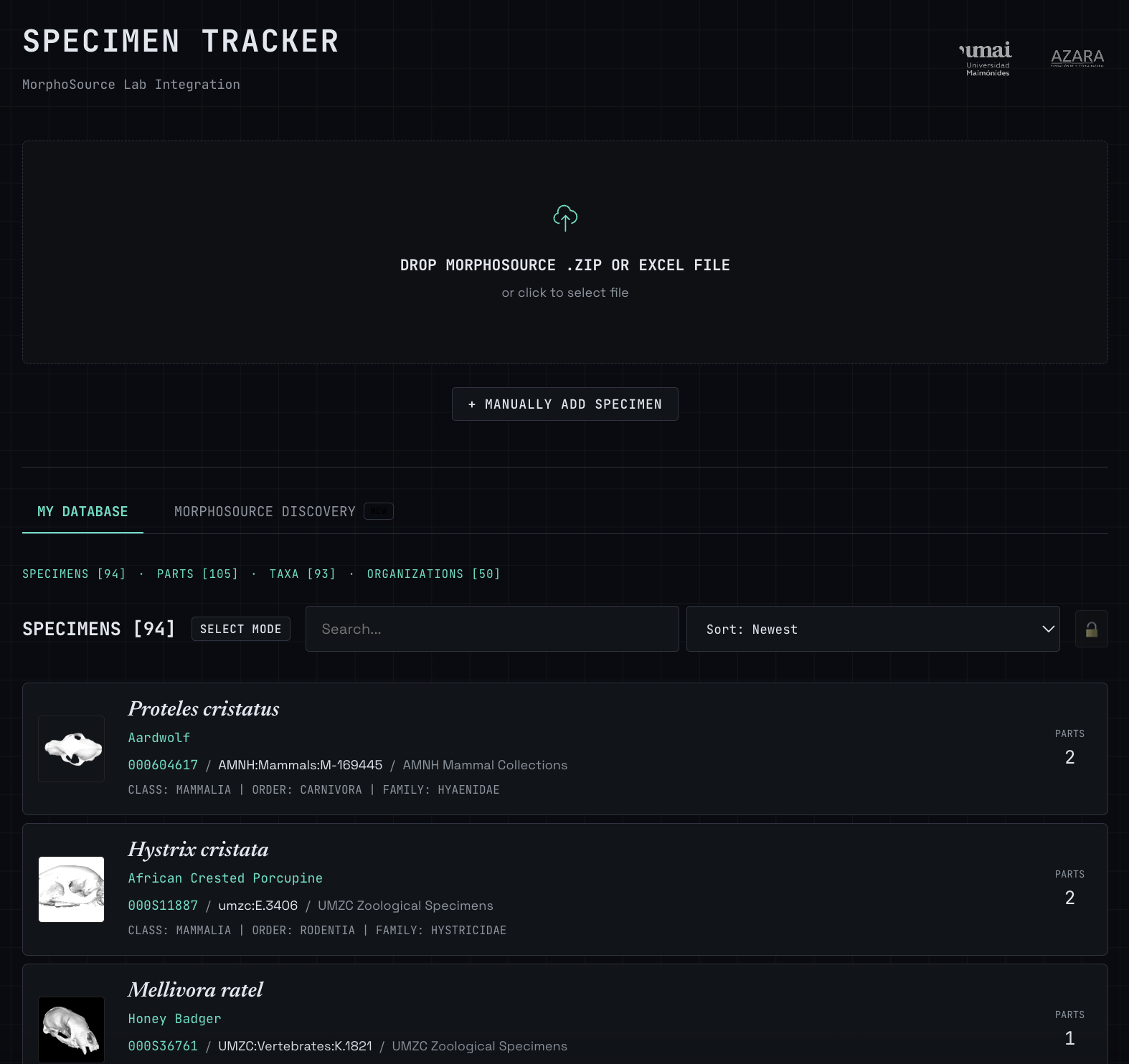
Instead of opening ZIPs one at a time, staff drop the files in by the batch. The system pulls the fields that matter, ignores the noise, and creates the species and part records on its own. The eighteen-column hunt is gone.
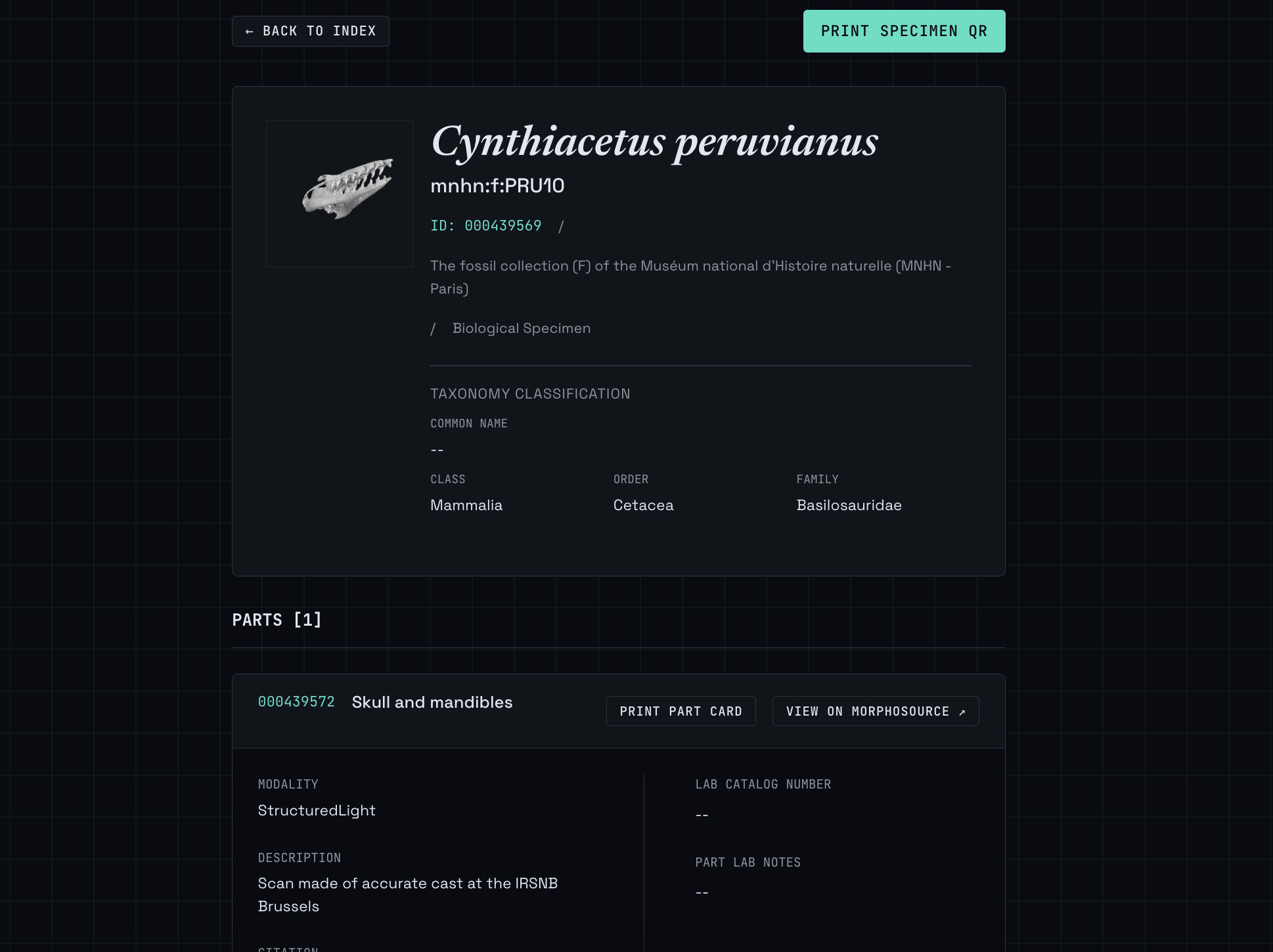
Records link their images straight from MorphoSource instead of storing them, so the database stays fast and lean while every record stays complete. Each print also gets a generated QR code: attach it to the model and anyone can scan it to pull the full record.
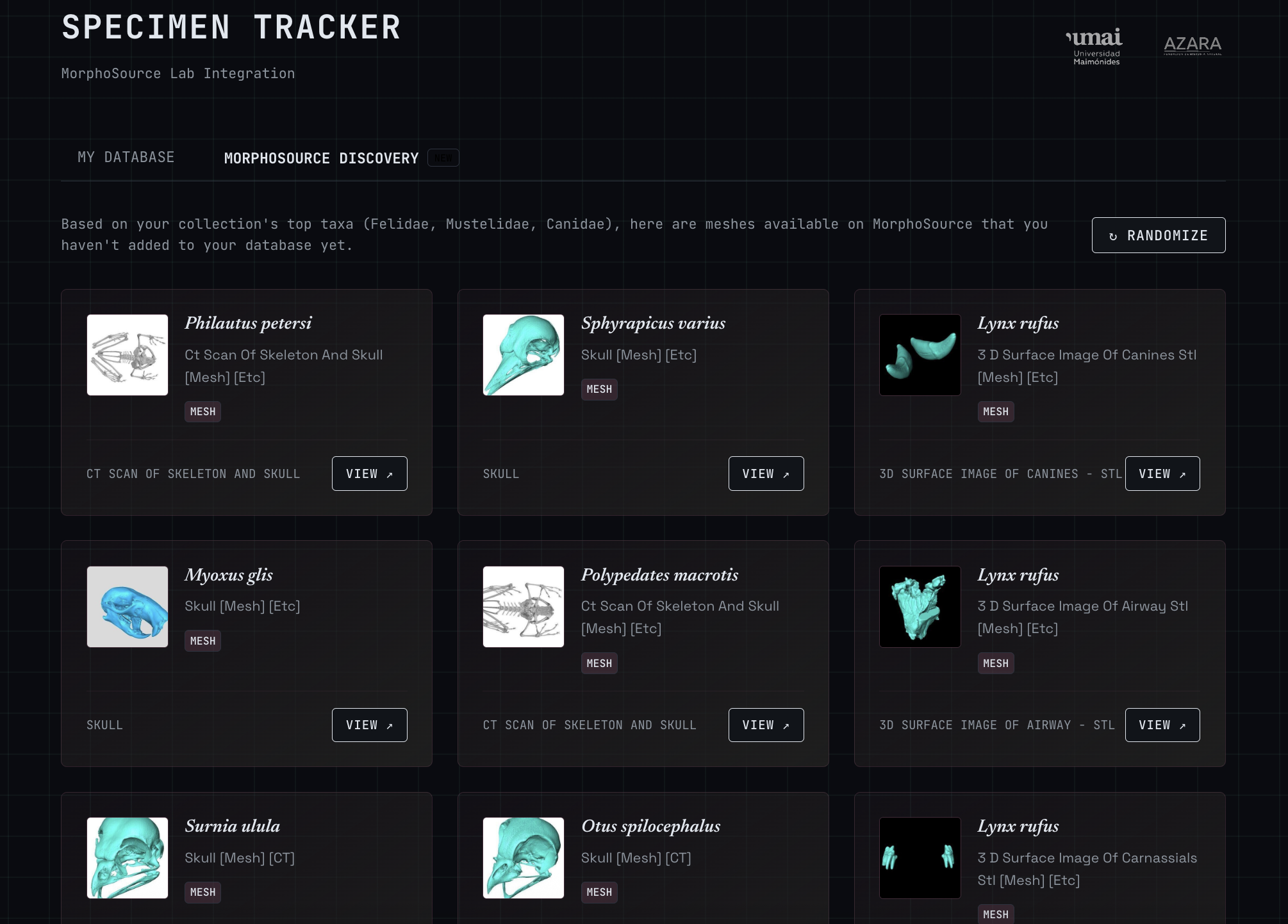
Then it goes past the old workflow entirely. It taps MorphoSource's public API to surface related models, and a recommendation engine suggests what's worth printing next based on the collection so far. Finding the good models, the first leak, is now the system's job.
The physical workflow
The system doesn't stop at the screen. It reaches the physical shelf too.
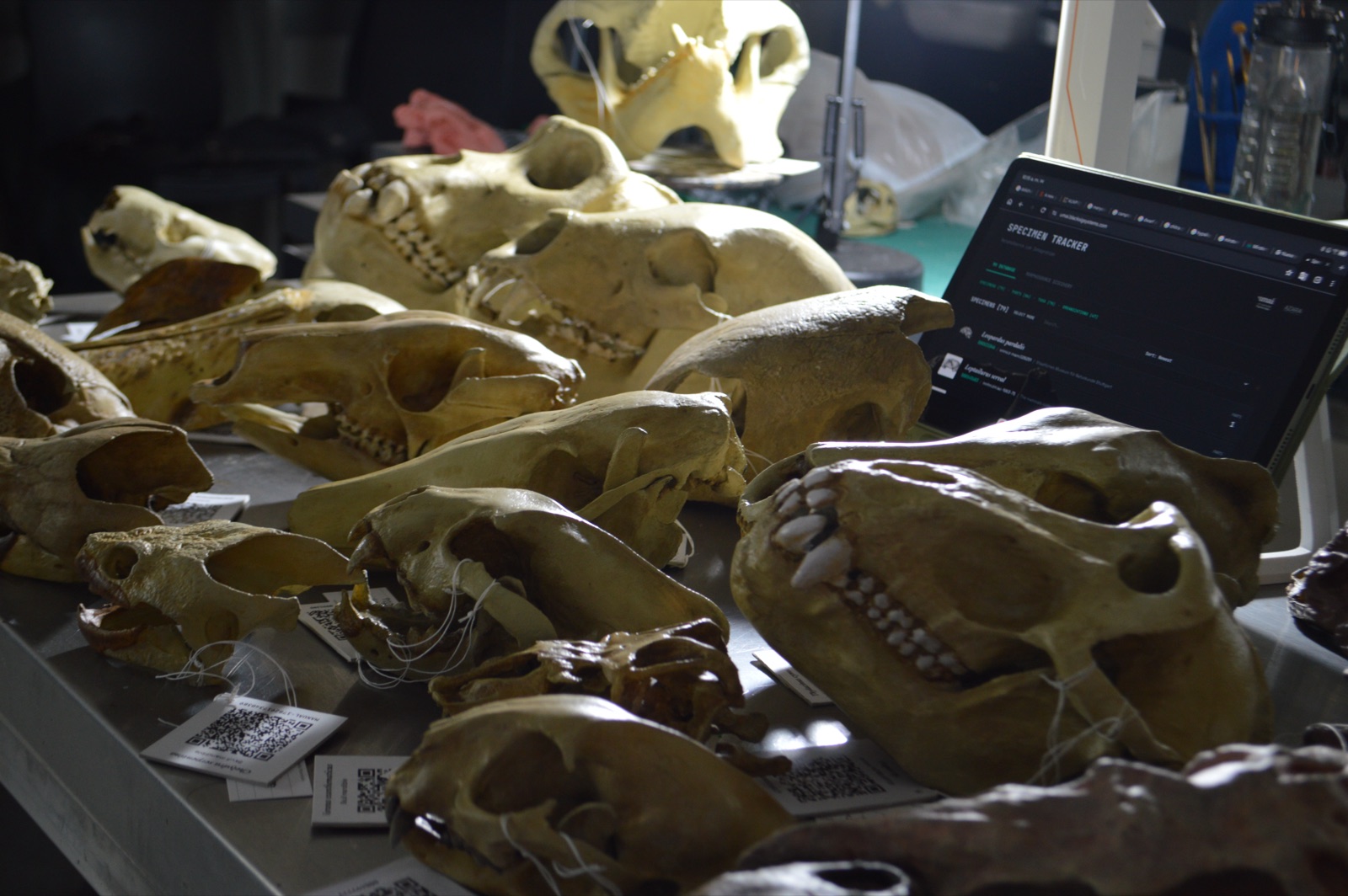
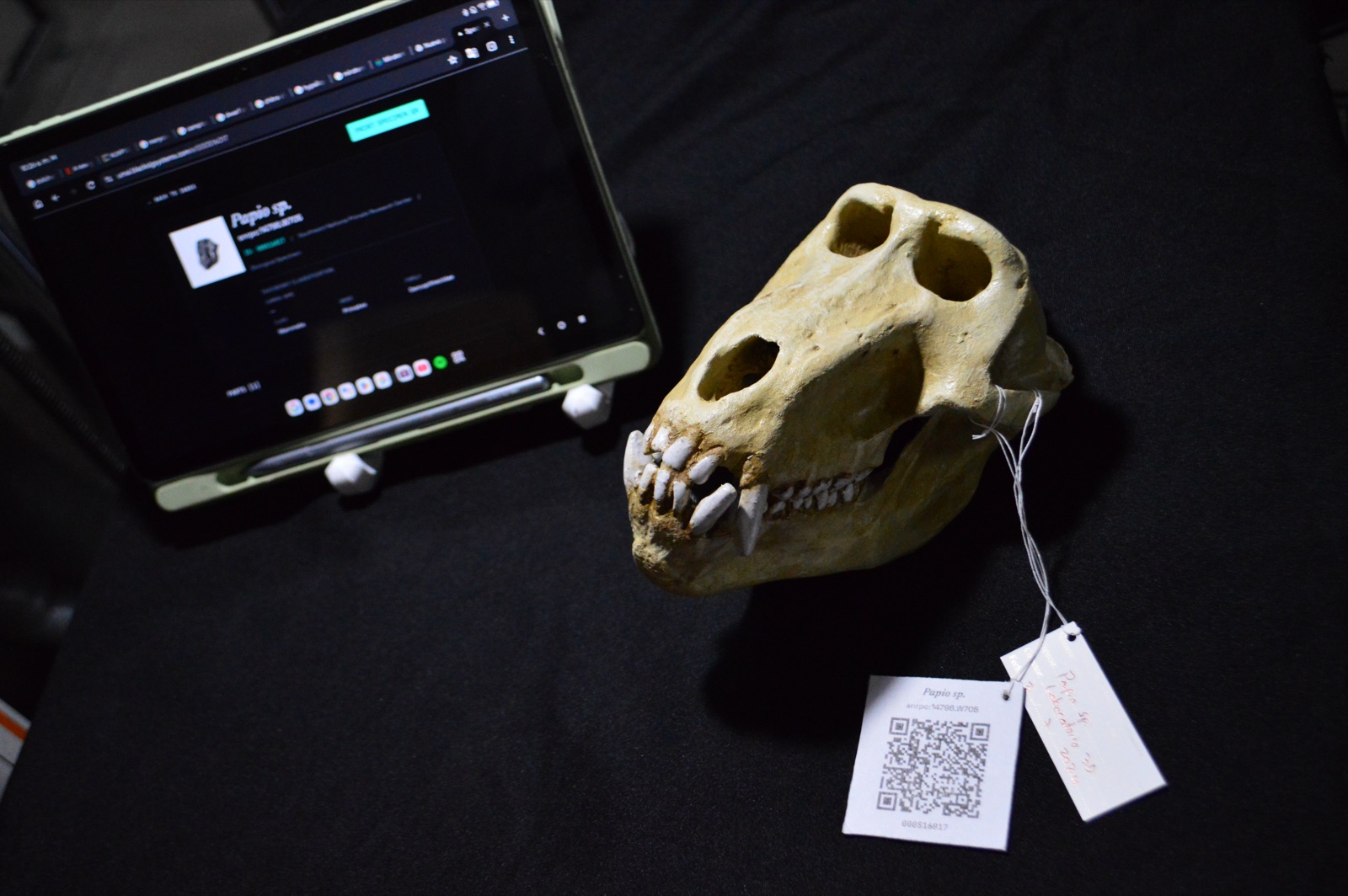
Each print carries a QR code that links back to its full record. The old handwritten card was slow to make, easy to lose, and impossible to keep current. Now it's a scan that pulls live, structured data.
What did the lab get back?
The lab got fifteen hours a week back, returned from data entry to actual research. At $50 an hour, that's about $39,000 a year in skilled time. A job that took an afternoon now takes a drag-and-drop.
Since launch we have refined it a handful of times as the team found more it could do. None of those were fixes; each one saved more time. It lives on our infrastructure, and we keep improving it.
The system isn't limited to one lab, either. When the biology curator for the Azara Foundation saw it working, they wanted one for their own collection. A working system generates that kind of interest in a way a proposal can't.
What this is, underneath
Most AI consulting stops at a slide deck: an audit, a roadmap, and a list of things for you to go build. We don't. We find where an organization leaks time or money, then build and ship the system that closes it. This is what that looks like: a real system deployed at a serious research institution, doing real work and running on its own.
If a workflow in your organization is quietly eating skilled hours, that's the kind of leak we find and fix.
Ready to handle more without hiring for it?
We find it, build the system that carries it, and run it for you every month after.